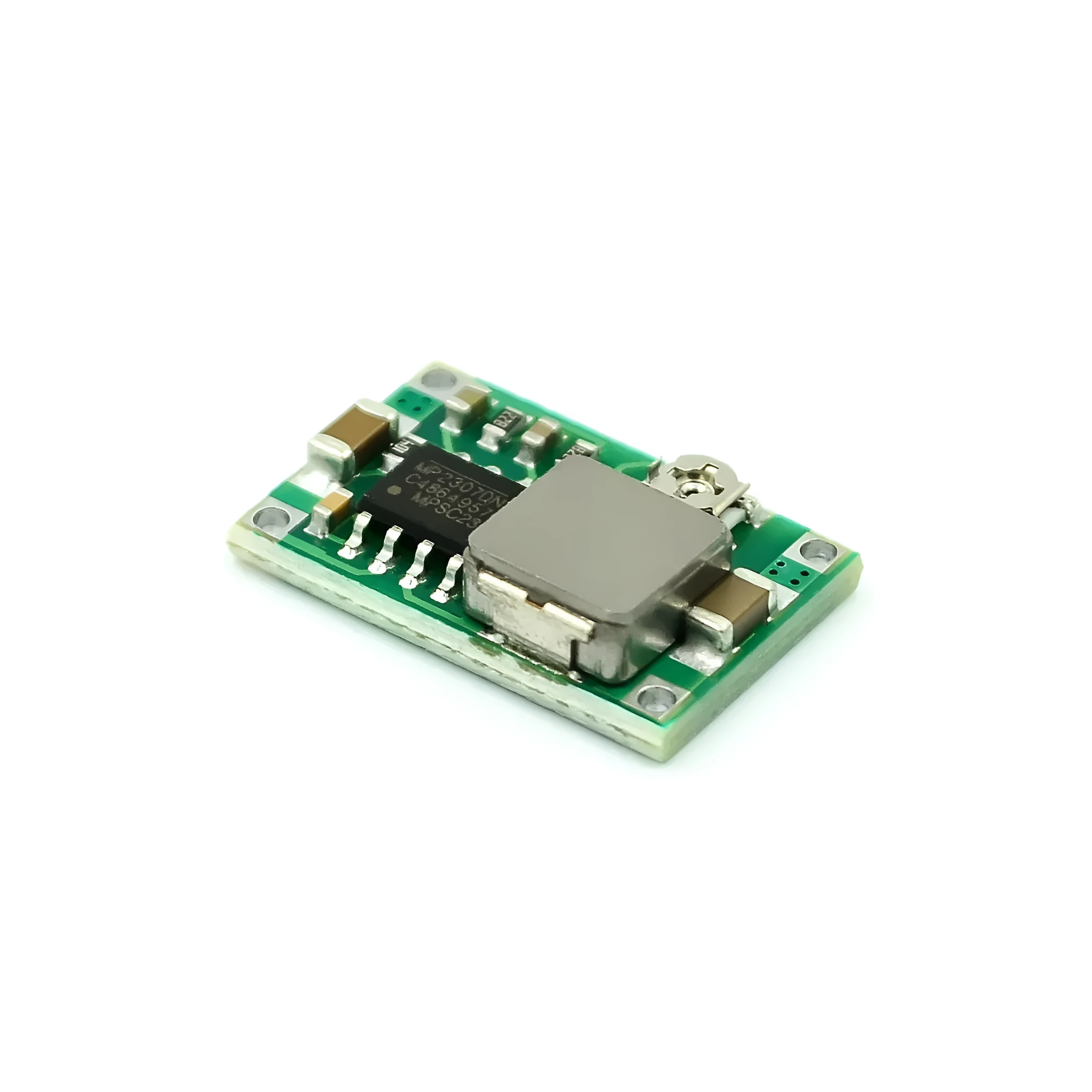
Mini 360 DC-DC Buck Converter Module Step Down Power Supply 4.75V-23V Input 1.0V-17V Output 3A Current Ultra Small 17x11x3.8mm Synchronous Rectification 96% Efficiency for Electronics Projects and Prototyping


Mini 360 DC-DC Buck Converter Module Step Down Power Supply 4.75V-23V Input 1.0V-17V Output 3A Current Ultra Small 17x11x3.8mm Synchronous Rectification 96% Efficiency for Electronics Projects and Prototyping
Mini 360 DC-DC Buck Converter: Ultra-Small 17mm Step-Down Module with 96% Efficiency
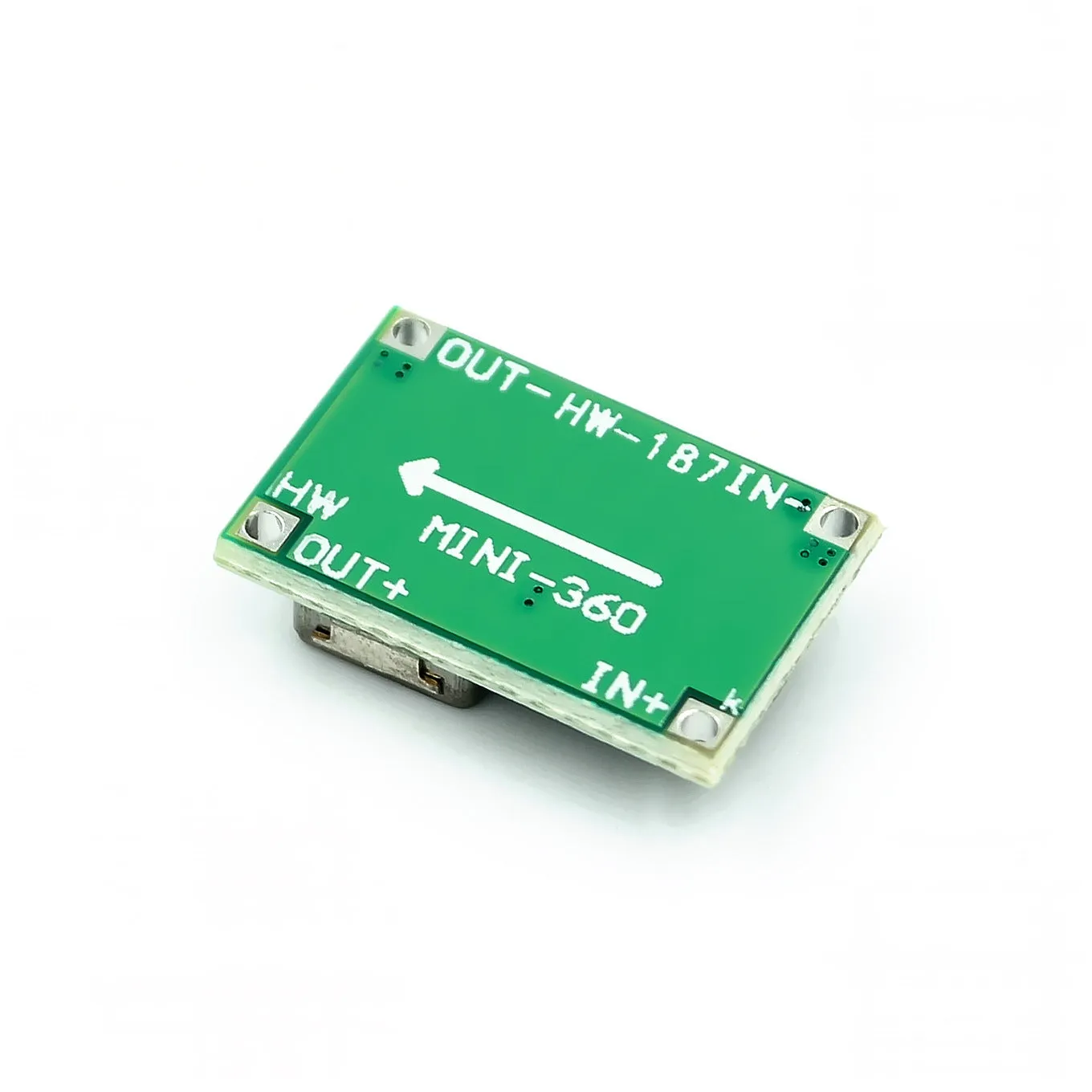
Electronic prototyping often requires adapting power sources to match component requirements, and the Mini 360 DC-DC buck converter addresses this need with remarkable compactness. Measuring a mere 17 x 11 x 3.8 millimetres, this non-isolated synchronous rectification module converts higher DC input voltages to lower, adjustable outputs with minimal board space consumption. Its 4.75V to 23V input range accommodates common power supplies like USB, 12V adapters, or battery packs, while the 1.0V to 17V output span suits microcontrollers, sensors, LEDs, and various digital circuits. The integrated design combines a power inductor and control chip to achieve up to 96% maximum conversion efficiency, reducing wasted energy as heat and extending portable device runtime. With a 340KHz switching frequency and operation from -40°C to +85°C, this module provides stable voltage regulation across diverse environmental conditions.
Technical Specifications and Electrical Performance
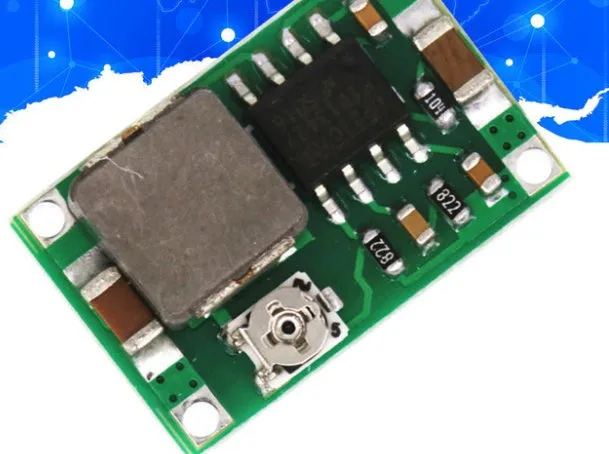
The Mini 360's specifications define its capabilities for various electronics applications. Each parameter stems from measured performance characteristics that determine where and how the module can be effectively deployed in circuits.
Voltage Input and Output Ranges
With an input voltage specification of 4.75V to 23V, this buck converter interfaces with numerous common power sources. The lower threshold accommodates standard 5V USB power with some overhead, while the upper limit accepts voltages up to 23V, covering many laptop adapters and industrial power supplies. Output voltage adjusts continuously from 1.0V to 17V via the onboard potentiometer, enabling precise voltage matching for sensitive components. This range supports everything from low-voltage logic circuits at 1.8V or 3.3V to higher voltage requirements for motors or displays. The ±2.5% voltage regulation ensures output stability despite minor input fluctuations.
Current Handling and Efficiency
The module's current specifications include a maximum output of 3A (described as the "lowering value") with continuous operation rated at 1.8A. This capacity handles moderate loads like small motors, multiple LEDs, or sensor arrays without requiring bulky heat sinks. Synchronous rectification technology contributes to the documented 96% maximum conversion efficiency, significantly reducing power dissipation compared to traditional diode-based designs. Higher efficiency means less energy wasted as heat, particularly beneficial in enclosed enclosures or battery-powered applications where thermal management and runtime are considerations.
Regulation and Signal Characteristics
Performance metrics include load regulation of ±0.5%, meaning the output voltage varies minimally as current draw changes from minimum to maximum. The 340KHz switching frequency places operation above audible ranges while maintaining reasonable inductor size. Output ripple measures 30mV under no-load conditions, a consideration for noise-sensitive analogue circuits. These characteristics combine to deliver clean, stable DC power suitable for digital logic, microcontrollers, and precision measurement circuits where consistent voltage references are important.
Physical Design and Construction Details
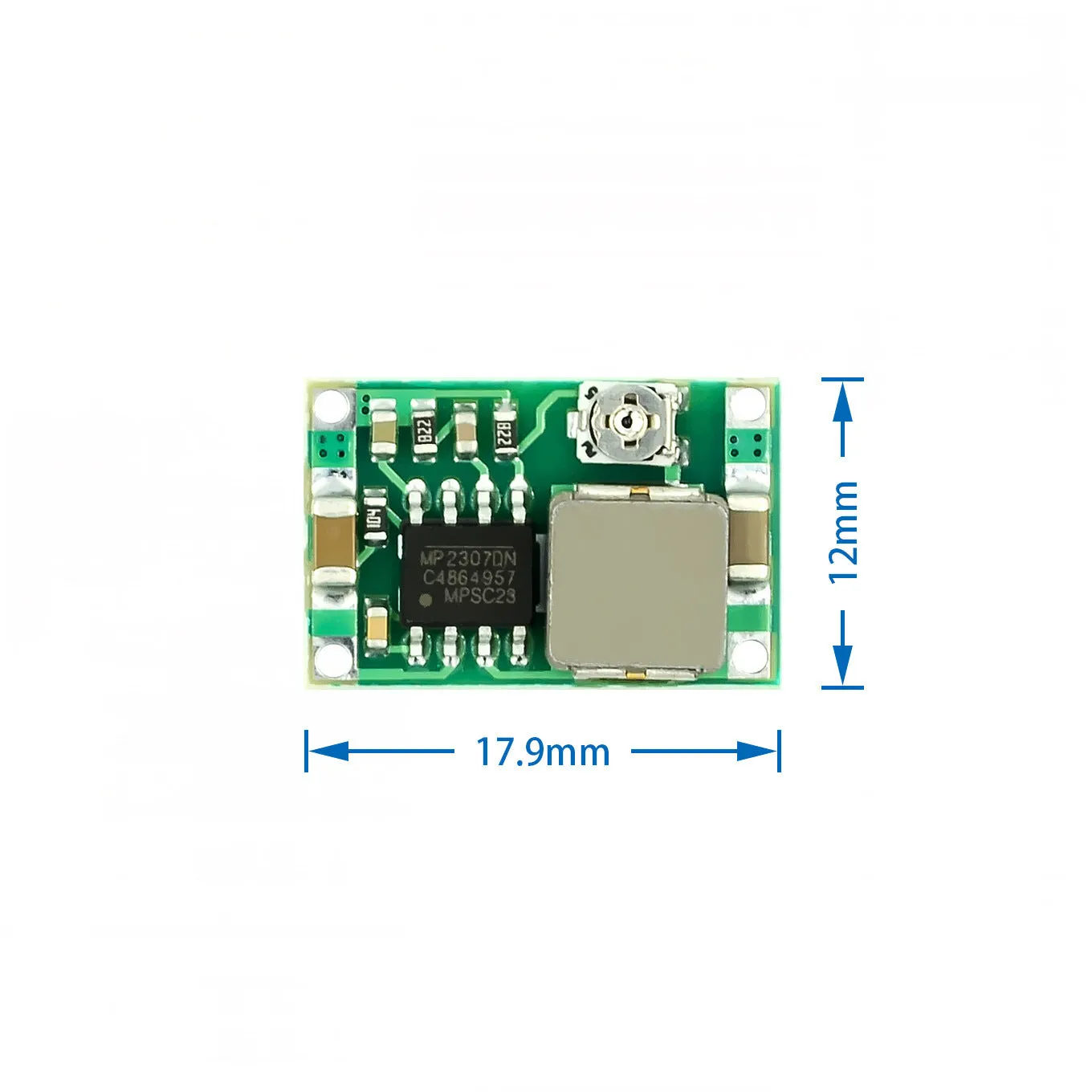
The module's compact dimensions and integrated construction represent its primary physical advantages. Every millimetre of the 17 x 11 x 3.8 mm form factor has been optimised for functionality in minimal space.
Ultra-Compact Form Factor
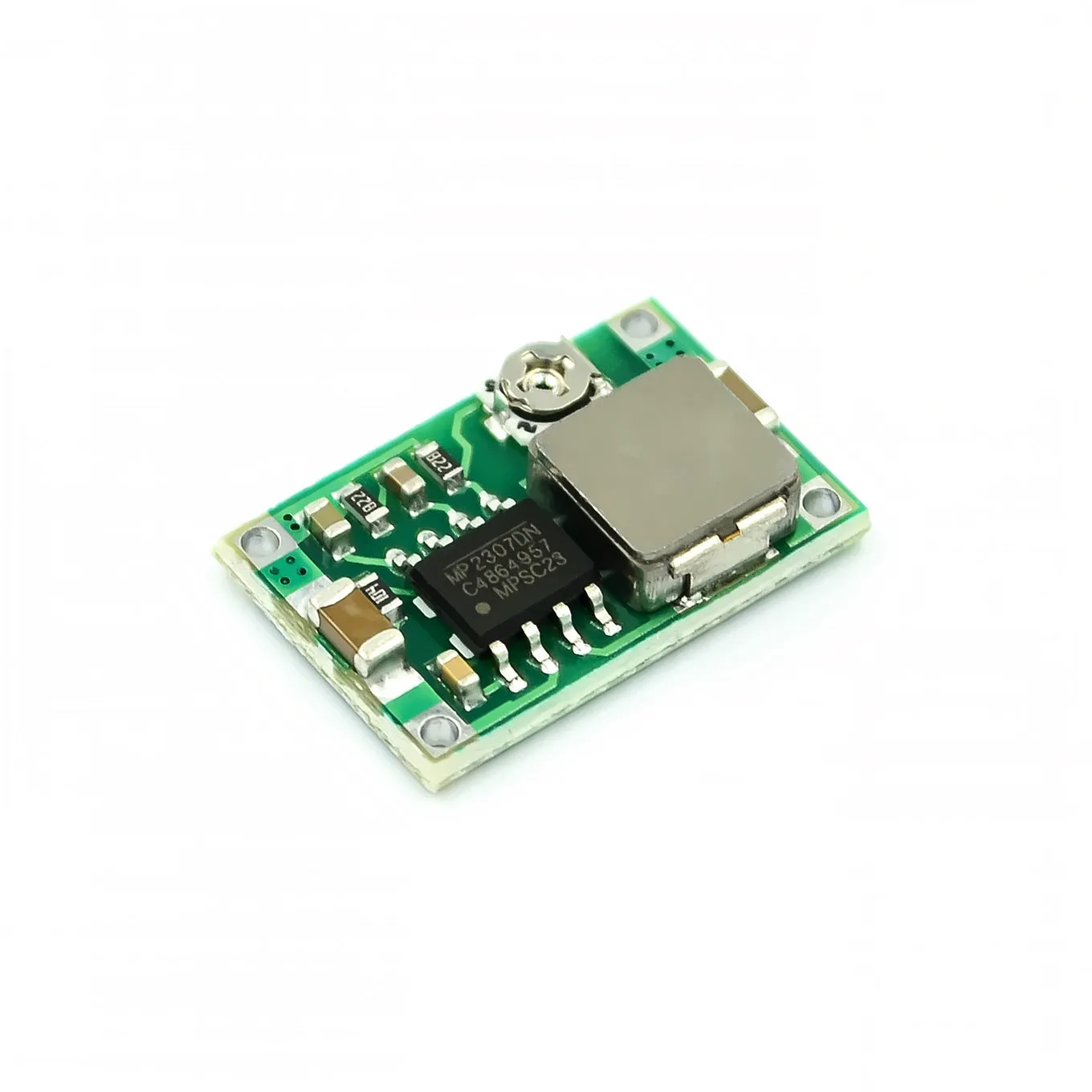
At just 17 millimetres long by 11 millimetres wide and 3.8 millimetres tall, the Mini 360 occupies approximately the same footprint as a standard microSD card. This ultra-small size allows installation in exceptionally tight spaces within existing equipment, prototype enclosures, or miniature electronic devices. The compact dimensions prove particularly valuable for portable projects, wearables, robotics, and anywhere board real estate is at a premium. Despite its miniature proportions, the module maintains standard 2.54mm (0.1 inch) pin spacing compatible with breadboards and prototype boards.
Integrated Component Design
Construction employs an integrally molded power inductor rather than discrete wire-wound components, reducing height and improving mechanical stability. This approach, combined with a synchronous rectifier control chip, achieves the documented efficiency while minimising component count. Surface-mount technology (SMT) places all components directly on the green PCB substrate, creating a low-profile package without protruding elements. The design prioritises reliability in varied orientations and environments, with solder connections reinforced by the component mounting method.
Connection and Adjustment Features
Input and output connections utilise standard through-hole pins suitable for soldering to wires or direct PCB insertion. An accessible potentiometer enables output voltage adjustment without requiring additional components, though a small screwdriver is needed for precise setting. The green PCB provides clear silkscreen labelling for input (IN+, IN-), output (OUT+, OUT-), and adjustment points, reducing installation errors. No additional heatsinking or external components are required for basic operation within the specified parameters.
Applications and Practical Implementation
This buck converter's combination of small size, adjustable output, and efficient operation supports diverse electronics scenarios. Understanding these applications helps identify where the module delivers particular value compared to larger alternatives.
Electronics Prototyping and Development
During circuit prototyping, the Mini 360 simplifies power management by converting available voltages to needed levels without complex design work. Breadboard compatibility allows quick integration for testing microcontrollers, sensors, or display modules requiring specific voltages. The adjustable output facilitates experimenting with different voltage levels to optimise performance or compatibility between components. Hobbyists and students benefit from the module's simplicity when learning about voltage regulation without designing custom circuits.
Embedded Systems and Final Products
In finished products, the module's small size enables inclusion even in compact consumer electronics, IoT devices, or portable instruments. It can efficiently step down battery pack voltages (such as 12V or 9V) to the 3.3V or 5V required by modern microcontrollers and wireless modules. The -40°C to +85°C operating temperature range supports industrial, automotive, and outdoor applications where environmental conditions vary significantly. Reliability stems from the synchronous rectification design's reduced thermal stress compared to linear regulators at similar current levels.
Power Supply Modification and Adaptation
The converter adapts existing power supplies to new requirements, such as modifying a 12V wall adapter to power 5V Arduino projects or 3.3V Raspberry Pi accessories. It can efficiently reduce voltage from solar panels or battery banks to appropriate levels for charging circuits or direct device operation. The module serves as a compact intermediary between mismatched power sources and loads, extending the usefulness of available power supplies without requiring complete replacement.